
If you're asking how do I get a tattoo made from my own idea, the answer follows a clear sequence: define the concept, build a reference brief, find the right artist, work through the custom tattoo design together, and show up prepared on the day. That sequence is straightforward once you understand what each stage involves, even if this is your first time. The clearer you are at each step, the more accurately the finished piece reflects what you imagined.
Many people stall not because their idea is bad, but because they don't know what an artist actually needs from them. The gap between "I have this feeling I want inked" and "here's a finished custom design" is smaller than it seems when you understand what drives each stage. As an example of the studio model built around this kind of work, Tattoo Garden in Everett, Washington, operates on an appointment-only, one-artist-one-client format, with a free consultation designed for clients who arrive with something meaningful and want it translated faithfully.
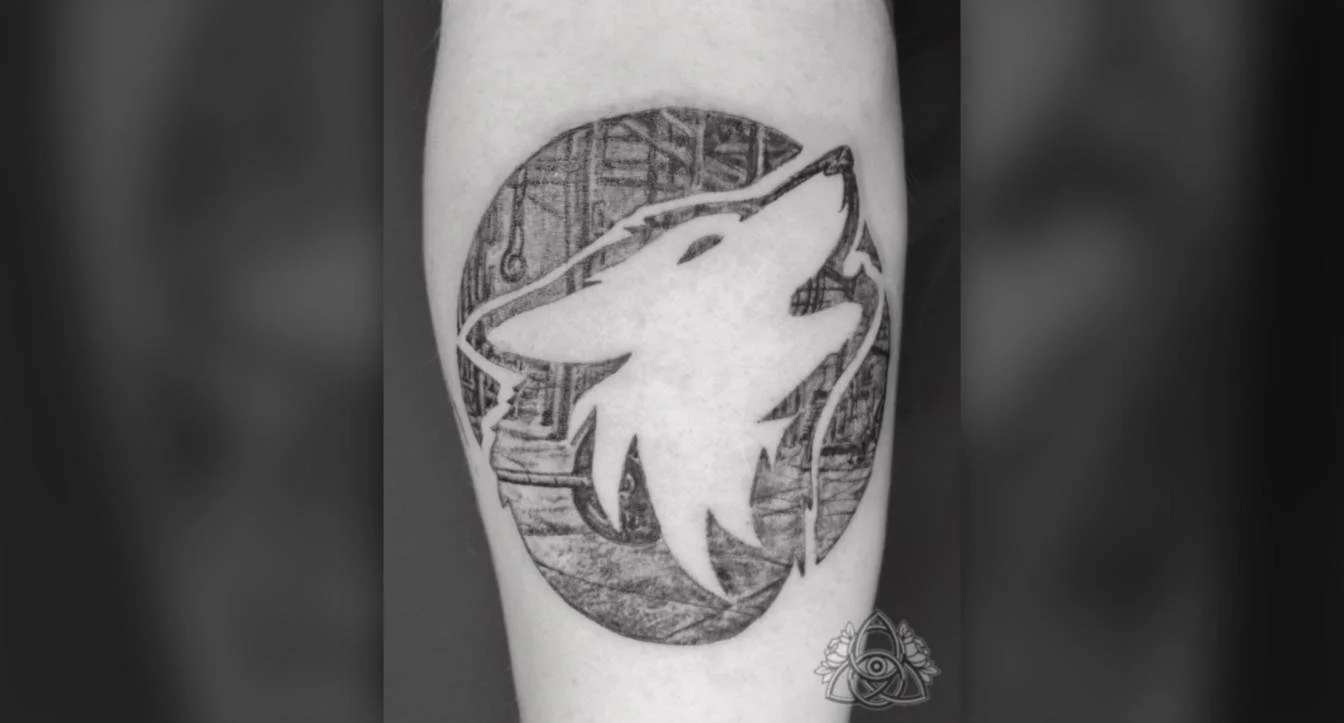
A former gym owner’s own idea: a custom piece built from a modified version of his gym’s logo, designed and tattooed by Michael at Tattoo Garden.
Key takeaways
Define the concept first: Write down subject, meaning, placement, size, style, and any hard limits before you approach anyone.
Build a focused brief: Three to five labeled reference images, each serving a specific purpose, communicate more clearly than a long paragraph of ideas.
Choose the right artist: Look for someone whose portfolio shows work in your preferred style and whose process gives your idea genuine attention.
Revisions are limited: Most studios include one to two rounds of revisions; give feedback that is specific and consolidated.
Stencil approval matters: This is your last opportunity to adjust placement and scale before ink touches skin.
How do I get a tattoo made from my own idea? Start by shaping the concept
Before you message a single artist, write down what the tattoo means, not just what it looks like. Subject, symbolic meaning, body placement, approximate size, preferred style, color versus black-and-grey, and any hard limits, such as symbols to avoid or elements that must appear, should all be on paper before you open your inbox. Artists use that context to make composition decisions, so sharing the why behind your idea is just as useful as describing the what.
Once you have those notes, get the concept down visually, even roughly. A stick-figure sketch communicates composition and spatial relationships better than words alone. If drawing isn't your thing, describe it like you're giving directions: foreground, background, what's centered, what's secondary. Clear photos of the actual subject, whether that's a pet, a person, a plant, or a place, are more useful than a finished tattoo image from someone else's portfolio. Mood boards, film stills, album covers, and architectural textures all do real work when it comes to communicating palette and atmosphere.
One distinction saves a lot of back-and-forth during the tattoo design process: separate what must stay exactly as you imagine it from what the artist can interpret freely. That single line in your brief gives the artist permission to make the design better without overstepping what matters most to you. Think of it as drawing a clear boundary between your non-negotiables and the elements where creative judgment is welcome.
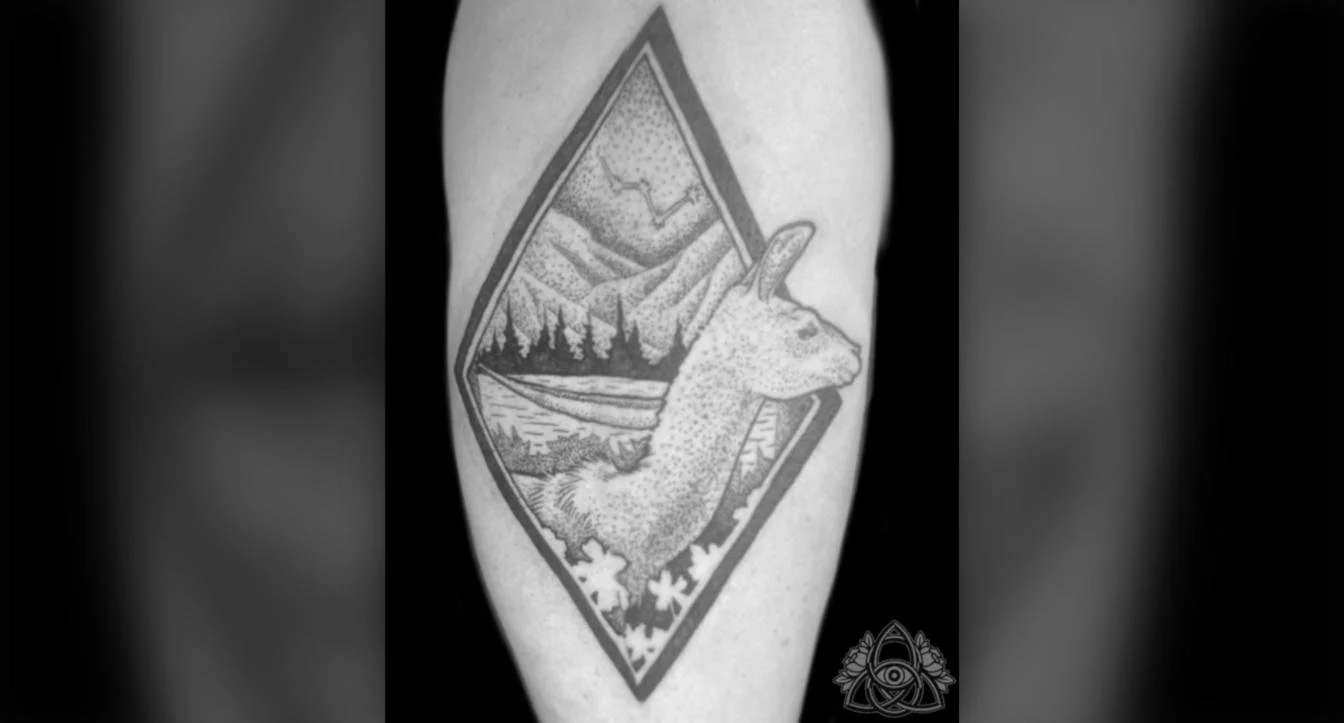
A commemorative piece for a special camping trip with llamas, built from the client’s own memory of the place.
What should you bring to a custom tattoo consultation?
A short, organized brief gets a faster, more accurate response than a long paragraph of ideas. Bring three to five labeled reference images, each serving a specific purpose: one for subject, one for linework or shading style, one for composition or mood. Add a note to each image explaining what specifically you like about it. "The open negative space here," "this line weight," or "the way the petals overlap" tells the artist far more than simply liking the image overall. Using a simple tattoo consultation checklist like this keeps the meeting focused and productive.
Avoid presenting another artist's finished tattoo as something to copy exactly. Treat it as a source for selected qualities, and give your artist room to redraw it for your body and their hand. Requesting an exact copy puts both you and the artist in a difficult position, and the result rarely serves either party well. If you have existing tattoos near the placement area, bring a clear photo so the artist can plan around them from the start.
Your first message to the artist should cover the following points:
The concept in one or two sentences
Placement and approximate size
Style and color preference
Three to five labeled references
Whether it's a cover-up or needs to work around existing ink
Your budget range if you're asking for a quote
The goal is to give the artist enough to assess fit and provide an honest estimate, not to solve every detail before you've spoken.
How does an artist translate your concept into original artwork?
After the consultation, the artist develops the composition through sketches, digital artwork, or a combination of both. This stage of the tattoo design process typically takes a few days to three weeks depending on complexity. A medium custom piece at a focused studio usually moves faster than the same project at a high-volume shop, because the artist isn't splitting attention between walk-in clients and ongoing custom work.
At Tattoo Garden, the person who hears your idea in the consultation is the same person drawing the design and doing the tattooing. That continuity matters: nothing gets lost in translation between staff members, and the artist's understanding of your concept deepens through every conversation. Larger projects, cover-ups, and pieces requiring multiple sessions take longer to develop and are often treated as ongoing collaborations rather than single deliverables.
Most custom studios include one to two revision rounds in the quoted fee, this is standard across the custom tattoo design process. Give feedback that is specific and consolidated: "the stem feels too long," "the font is too ornate," or "can the bird face left instead?" works far better than "something feels off." Many artists don't send a fully finished design weeks in advance; some reveal or finalize it at or shortly before the appointment. That is a studio-specific practice, not a red flag. Major changes to scope, size, or concept after the design is built may affect the quoted price, so flag significant second thoughts early.
What do deposits, revisions, and pricing look like for custom work?
Canadian tattoo studios typically require a deposit to hold the booking. This deposit is usually applied to the final price but is non-refundable if you cancel or no-show. Most studios allow one reschedule with at least 48 hours' notice; cancelling inside that window or arriving substantially late generally means forfeiting the deposit. Before you pay, confirm in writing: the deposit amount, whether it applies to the final price, the exact cancellation deadline, how many reschedules are allowed, and what counts as a major design change that might affect pricing.
Color work typically runs 20 to 30% more than comparable black-and-grey because it requires additional passes and blending, according to Associated Press News (apnews.ca). According to GetInked (getinked.net), hourly rates generally fall between $100 and $250+ CAD, with senior artists and urban studios on the higher end. Large multi-session pieces are usually billed by the hour or by session rather than as a flat project fee, since shading, skin response, and healing make the total time difficult to predict upfront.
What happens on tattoo day, from stencil approval to finished piece?
The artist applies a stencil of the design to your skin before tattooing begins. This is your final opportunity to request changes to placement, angle, or scale. Walk to a mirror, check it from several angles, and don't rush the approval. A few extra minutes at this stage is infinitely easier than addressing placement regret afterward. You can reasonably request the design to be moved higher or lower, resized, rotated to follow the body better, or corrected if anything doesn't match the agreed concept.
Be specific with any stencil feedback. "Move it 2 cm higher and rotate it slightly clockwise" gives the artist something to act on immediately; "it feels wrong" does not. Artists prefer precise direction at this stage because it lets them make the adjustment once and get it right, rather than repositioning repeatedly based on guesswork. Don't approve the stencil until you're genuinely comfortable with it, a good artist would rather adjust it than tattoo something you're not fully settled on.
After the session, full tattoo healing takes several weeks. The outer skin closes in roughly two to four weeks, with deeper layers continuing to settle for up to several months. Follow the specific aftercare instructions your artist provides rather than general internet advice, since artists tailor recommendations to their technique and the region tattooed. If a touch-up is needed, wait at least six to eight weeks before booking it, and confirm whether the studio's touch-up policy is included or charged separately before you leave the appointment.
From concept to finished piece: putting it all together
How do you get a tattoo made from your own idea? You define the concept before you approach anyone, build a brief that separates your non-negotiables from the elements you're open to, and choose an artist whose process gives your idea the attention it deserves. The tattoo design process moves more smoothly, and produces better results, when the client arrives prepared and the artist has room to do genuine custom work.
For Canadians in the Greater Vancouver area and Fraser Valley looking for a studio built around exactly this kind of personal work, Tattoo Garden in Everett, Washington, is worth considering. The studio runs on an appointment-only format with a free consultation, so the focus stays on turning your idea into an original piece rather than moving through a queue. Get in touch to start the conversation.
Frequently Asked Questions
Will I meet the same artist who will draw and tattoo my design?
Yes, at Tattoo Garden the person who hears your idea in the consultation is the same person drawing the design and doing the tattooing. That continuity prevents details from getting lost and deepens the artist's understanding of your concept through every conversation.
How long should I wait before booking a touch-up if it's needed after healing?
Wait at least six to eight weeks before booking a touch-up. Also confirm whether the studio's touch-up policy is included in the price or charged separately before you leave the appointment.