
An appointment-based tattoo shop is a studio where sessions are booked in advance, typically after a consultation, so the artist can reserve that time exclusively for you. This model exists because tattooing, when done thoughtfully, is not a fast transaction. It is a planned collaboration between two people.
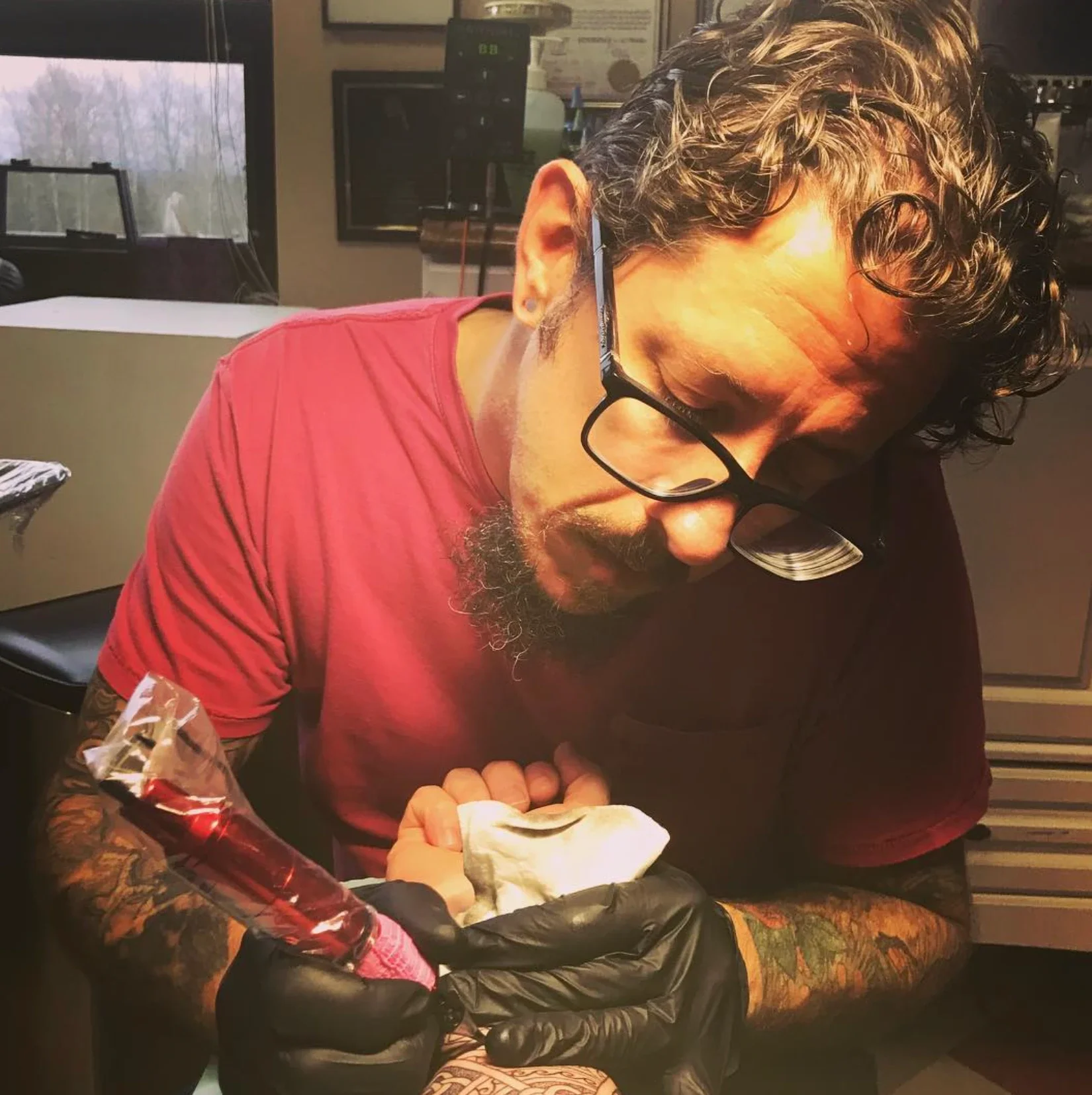
Studios like Tattoo Garden in Everett, Washington are built around private, one-on-one sessions with a single artist. Tattoo Garden has been open since 2008, and artist Michael T. Gardner has been tattooing since 1995. Most work there is scheduled ahead of time, and walk-ins are welcome when the schedule allows. For complex, custom, or multi-session work, planning ahead tends to improve outcomes because it allows more preparation than a walk-in setting can offer. This article explains how the appointment-based model works, how it compares to walk-in shops, and how to find and book a tattoo appointment at a studio near you that operates with the same intention.
Key takeaways
Planned in advance: Most sessions are booked ahead, often following a consultation before the booking is confirmed. Some studios, including Tattoo Garden, also take walk-ins when the artist has open time.
Design work happens first: Custom artwork, stencil preparation, and artist review happen before your appointment begins, not during it.
Deposits are common: Expect to hold your booking with a deposit, credited toward your final cost.
Plan ahead for custom work: Lead times vary by project size, and larger pieces often require months of advance planning.
Canadian clients cross the border: Tattoo Garden in Everett, WA is a short drive from the BC border and offers a free consultation to start the process.

What exactly is an appointment-based tattoo shop?
The model is simple in practice. You contact the studio, describe your idea, schedule a consultation, leave a deposit, and return for your tattoo session. By the time you sit down, the artist has already reviewed your concept, prepared the design, and cleared uninterrupted time for the work. You are not waiting on a bench hoping a slot opens up.
Most appointment-based studios build a consultation into the process before confirming a booking. This is where you share reference images, discuss placement, size, and style, and align on what the finished piece should look and feel like. Some studios, including Tattoo Garden, offer this consultation free of charge. A well-defined idea at the start produces a better outcome at the end, and the consultation is where that clarity gets established.
Studios fall along a spectrum. Some are strictly appointment-only, some run a hybrid approach that protects certain blocks for booked clients while keeping a few hours open for walk-ins, and others are built primarily around walk-in traffic. Tattoo Garden works mostly by appointment, and the artist does take walk-ins when nothing else is scheduled. Smaller pieces that don't need design time are often easy to fit in this way, while larger or custom work is better planned ahead.
How does a private tattoo studio differ from a walk-in shop?
Walk-in studios are built for throughput. They tend to be busier, louder, and more unpredictable, which works well if you want a small flash piece on a weekday afternoon and don't mind who does it. A private studio runs at a different pace. Sessions are spaced to allow proper setup and cleanup, and there is no background noise of competing conversations or a queue of waiting clients. For someone nervous, private, or working on something emotionally significant, that difference is not minor.
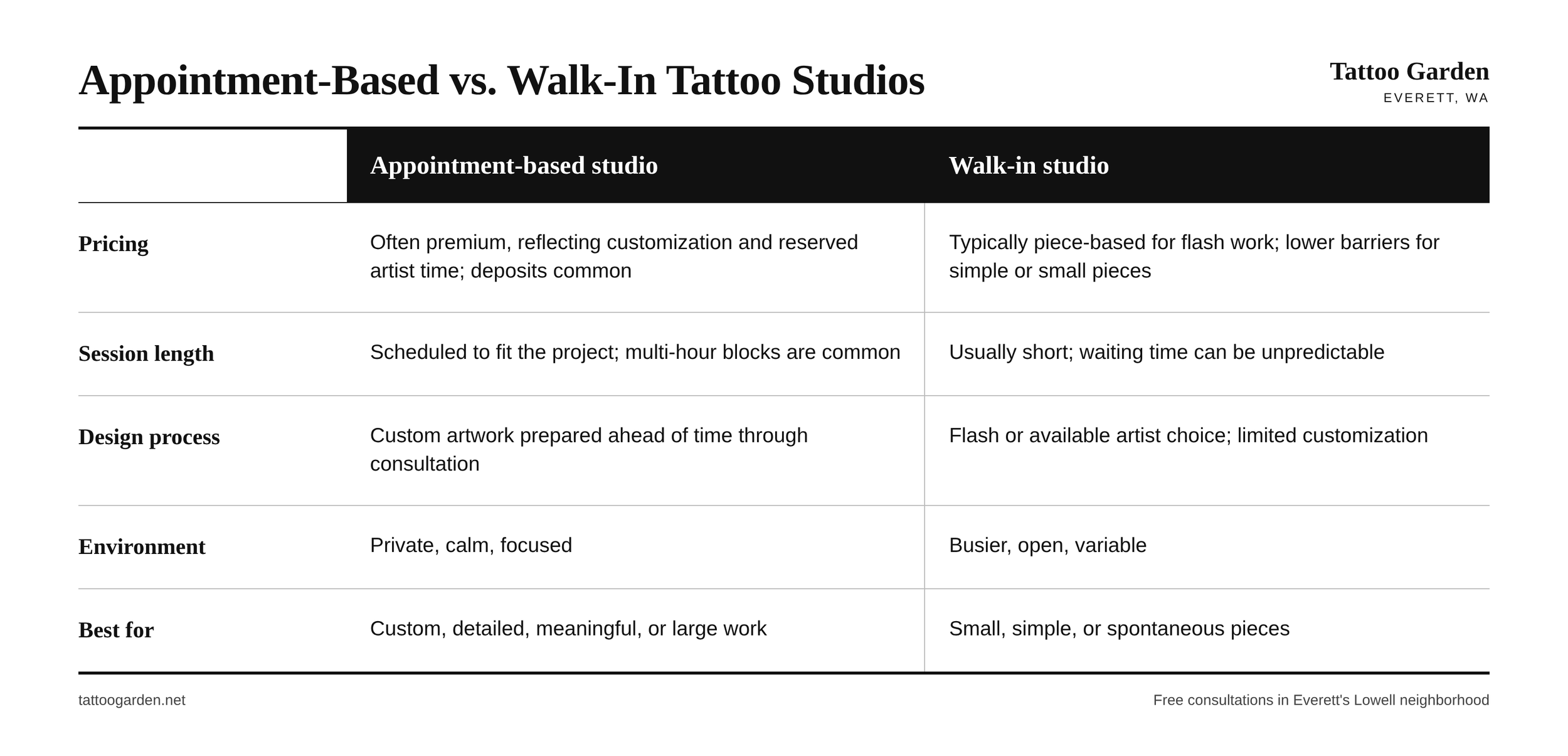
For detailed, complex, or emotionally significant work, planning ahead is better suited. The preparation that precedes the session, including consultation, design refinement, and stencil preparation, reduces the errors that come from rushing. Cover-ups, portraits, memorial pieces, and large multi-session projects all benefit from that structure, because each one requires more from both the artist and the client than a brief walk-in session can realistically provide.
Why clients who want custom work prefer this model
In a busy walk-in shop, the artist manages multiple clients, unpredictable scheduling, and a front desk. In a private session, their full attention is on you and your tattoo. That shift in dynamic matters, particularly when you are working on something personal, covering old work that carries complicated history, or getting your first tattoo and have questions that deserve real answers.
The design process is different here too. Because the conversation happens before anything is permanent, the final tattoo is more likely to reflect what you actually wanted. The artist can incorporate your specific references, adjust proportions for your body, and refine the design before either of you is committed to it. This matters most for portraits, memorial pieces, and anything carrying real emotional weight.
Walk-in environments can create a subtle pressure to decide quickly. There is a queue, the artist has other clients, and the shop is moving. Booking ahead removes that pressure. Many clients seek private studios for a calmer, more personalized experience, with a considered process at every stage, from first conversation to finished piece.
How to find a reputable private studio near you
Search for terms like "private tattoo studio" or "appointment tattoo shop" combined with your city. Look for studios where the booking policy is clearly stated on the website, not buried in small print. A studio that has invested in a clean consultation process and a transparent booking system is usually one that takes the client relationship seriously. Check the portfolio for consistency: does the artist's work hold up across different styles, sizes, and projects?
Canadian studios that work by appointment
Several Canadian studios are known to work primarily or entirely by appointment. In Ontario, Paradiso Tattoo and Melancholy Tattoo Co. are private studios. In British Columbia, Patchwork Art Studio and Beyond Belief Tattoos in Vancouver are options. Nova Scotia has The Artists Room Custom Tattoo Studio in Dartmouth, and Manitoba has Crocus Tattoo Studio in Winnipeg. Policies and availability change, and specialties vary across all of these, so always contact a studio directly before making plans.
For clients in the Greater Vancouver area, the Fraser Valley, or anywhere along the BC and Washington corridor, Tattoo Garden in Everett, Washington is worth knowing about. It has been open since 2008 as a private studio run exclusively by Michael T. Gardner, who has been tattooing since 1995. Most work is booked in advance, and walk-ins are accepted when the schedule is open. The free consultation is where every project begins, and for Canadians willing to make the short drive south, it is a compelling option, particularly for custom work, cover-ups, or anything that deserves more than a rushed session.

What to know before you book and show up
Most appointment-based studios require a deposit to hold your booking. Deposits are typically credited toward your final cost, and policies on refunds vary by studio, so read the deposit terms before you pay. Tattoo Garden's deposit and cancellation policy is posted on its website. Lead times also vary: small custom pieces often book roughly two to eight weeks out, while large projects benefit from starting the consultation at least three to six months ahead. Cancellation policies differ by studio, but 24 to 48 hours' notice to reschedule is common, and last-minute cancellations often affect the deposit.
What to bring to your tattoo appointment
Bring a government-issued photo ID, several reference images covering style and composition you like (not necessarily exact tattoos to copy), and a payment method for your deposit. If you are planning a cover-up, you don't need to bring photos of your existing tattoo, since many artists, including Michael at Tattoo Garden, prefer to take their own "before" photos. Wear clothing that allows easy access to the area being tattooed. Eat a full meal beforehand, stay well hydrated, and avoid alcohol before your session. For longer appointments, a snack and water to keep on hand are worth bringing. For more, see our guide on how to prepare for your tattoo appointment.
Health disclosures and day-of preparation
You will likely complete a consent or health questionnaire before your session. Be candid about anything relevant: bleeding disorders, diabetes, immune conditions, active skin issues at the tattoo site, and any medications, particularly blood thinners or drugs that affect healing. Do not stop prescribed medication without your doctor's advice. Inform the artist at your consultation instead, and let them adjust the plan if necessary. Arriving sober, rested, and physically prepared makes the session smoother and supports proper healing afterward.
The right shop makes the difference
Choosing a private studio is a deliberate act. It says the work matters enough to plan for, that the relationship between artist and client deserves time, and that the environment around the tattoo should feel calm rather than chaotic. If you are planning something meaningful, a cover-up, or simply want to feel genuinely heard throughout the process, a private studio is worth the extra lead time.
If you are in the Pacific Northwest or considering a trip from BC, Tattoo Garden offers a free consultation to start the conversation. Book a free consultation to discuss your idea with the artist before scheduling, or browse the custom tattoo gallery and tattoo designs to see his work first. More than 30 years of tattooing experience shapes every session there, and that is the kind of experience worth planning for.
Frequently Asked Questions
Can Canadians drive across the border to Tattoo Garden for a consultation or appointment? Yes. Tattoo Garden in Everett, Washington is a short drive from the BC border and offers a free consultation to start the process. For clients along the BC and Washington corridor, it can be a practical option for custom work, cover-ups, or any work that deserves more than a rushed session.
Does Tattoo Garden accept walk-ins? Yes, when the artist has open time. Most work is booked in advance, and larger or custom pieces need design time, so a consultation first is the best route for those. Smaller pieces can often be done as walk-ins when nothing else is scheduled.
Do appointment-based studios ever accept walk-ins? Some do. Studios run everything from strictly appointment-only schedules to hybrid models that keep a few hours open for walk-ins while protecting booked time for clients. Check each studio's policy directly, since it varies.