
How Much Does a Tattoo Actually Cost?
"How much does a tattoo cost?" is one of the first questions almost everyone asks, and it's also one of the hardest to answer honestly, because the real answer is: it depends. Not in a vague, dodging-the-question way — there are real, specific factors that move the price, and once you understand them, the number stops feeling random.
I'm Michael Gardner, owner and artist at Tattoo Garden, a private custom tattoo studio in Everett's Lowell neighborhood. I've been tattooing for over 30 years, and pricing is a conversation I have almost every single day. Here's the honest breakdown.
Why My Minimum Is Higher Than You Might Expect
I get a fair number of cold calls from people comparing prices around town. The most common question is simply: what's your minimum? Mine is $200, which is above the typical shop minimum in this area, and occasionally someone asks why.
Here's the honest answer: that price reflects more than just a quick tattoo. It reflects an experience — not being rushed through a busy shop schedule to make room for the next person, but actually getting the time and attention the piece deserves. A minimum isn't just a floor for small tattoos; it's a signal of the kind of studio you're walking into.
The Biggest Misconception: "Big Pieces Are Too Expensive"
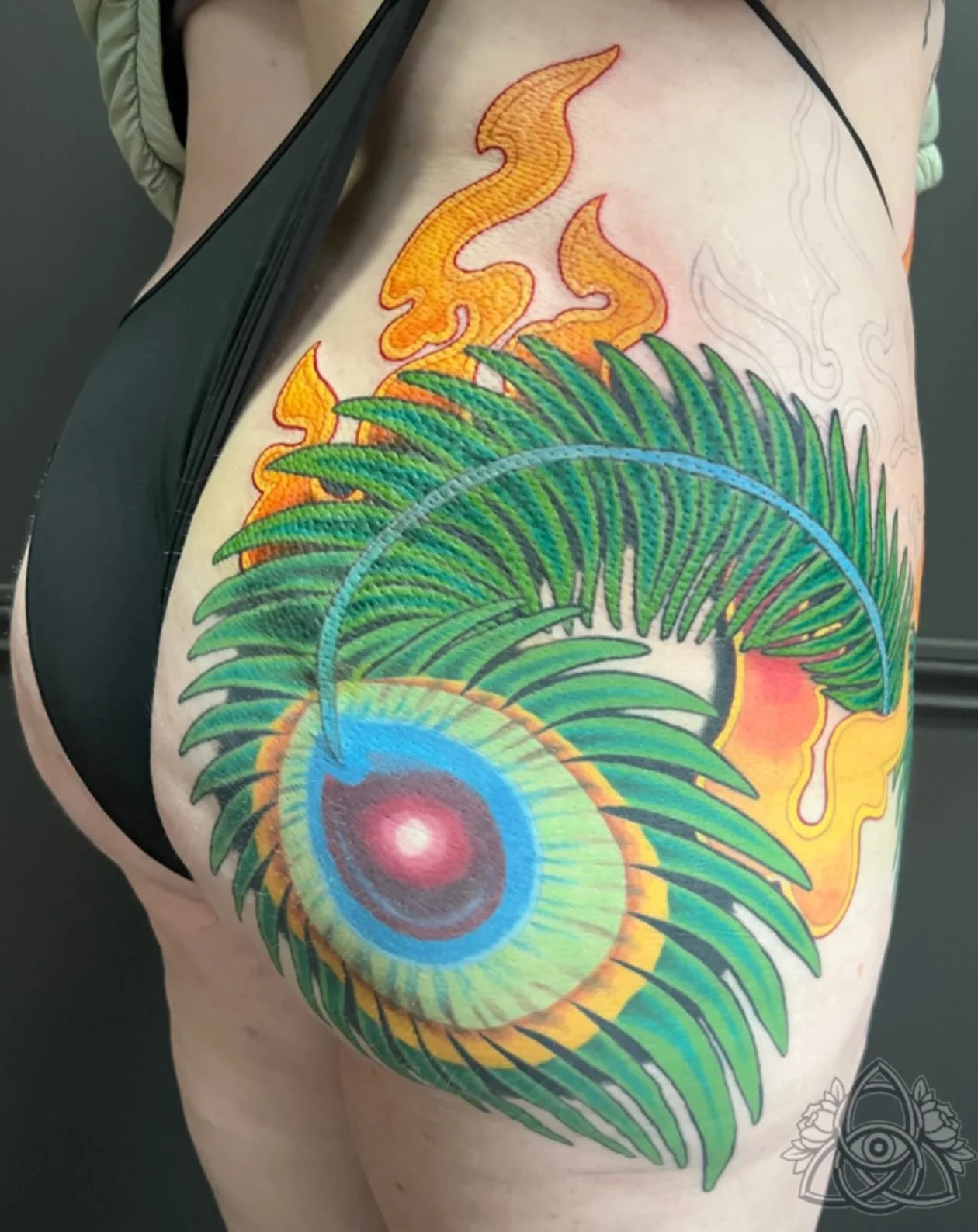
The most common misconception I hear is that larger tattoo work is simply out of reach financially for most people. It usually isn't — but the way people think about paying for it is often the real obstacle.
A large tattoo doesn't have to be one lump sum. If I estimate a piece at 6 hours, that can be done in a single session, but it can also be broken into 2 or even 3 sessions spread over time. So instead of trying to come up with $1,200 all at once for a 6-hour session, you could do two 3-hour sessions over two months, or three 2-hour sessions spread across three months — roughly $400 a month. Same tattoo, same total cost, much more manageable.
What Different Price Points Actually Look Like
Pricing guides love to throw out national averages, but those numbers rarely mean much without real examples. Here's a rough sense of how price scales with size, detail, and placement, using one recurring subject — a tiger head — to keep the comparison apples to apples:
A 2.5-inch minimal tiger head on the ankle: around $200
A 4-inch black and grey tiger head on the forearm: around $450
A 6-inch full-color tiger head on the chest: around $1,000
The same pieces placed on the throat, stomach, inner thigh, or a rib panel: roughly 20% more, due to the added difficulty of those areas
A full black and grey back piece — a tiger fighting a giant boa constrictor, on a 6-foot-tall frame: roughly $4,500
The same back piece in full color: double that or more, depending on detail and background work
Worth noting: the subject matter itself (tiger, snake, whatever you're picturing) has far less to do with the price than size, placement, color, and detail. Two people asking about "a tiger tattoo" could get very different quotes depending on all of that.
The Budgeting Mistake Most People Make
A common mistake I see is people trying to save up a large, vague amount of money before ever talking to a tattoo artist. The problem isn't the saving — it's the vagueness. A fuzzy goal ("save up a lot for a tattoo someday") is genuinely hard to stay motivated toward.
It works much better to flip the order: figure out roughly what you want, talk to an artist to get an actual number, and then save toward that specific, concrete goal. It's easier to track progress toward $1,200 than toward "enough," and that visible progress is what keeps people motivated to follow through.
Where Online Pricing Guides Fall Short
Most generic pricing guides oversimplify in ways that don't hold up in practice. Tattoo pricing is regional — a national average tells you almost nothing useful about what you'll actually pay in your area. And most guides that do mention artist experience treat it as a simple cost multiplier, without factoring in what that experience actually buys you.
In my experience, a more experienced tattoo artist might charge twice as much per hour as a beginner — but they're often three times faster. Do the math, and you frequently end up paying less overall, and spending far less time in the chair, by choosing the more experienced (and more expensive-sounding) option.
On Shopping Around and Negotiating
Price negotiation almost never comes up in my studio — but shopping around does, and I actually encourage it. I remember one consultation where a client admitted they were still comparing artists. I told them honestly that I respected the effort, and that I hoped whoever they chose gave them a great tattoo and a great experience. They came back to book with me a few weeks later.
That's not an unusual outcome. If someone is only comparing prices without weighing quality or specialization, they're probably not the right fit for my studio anyway — and that's fine. If someone calls asking about pricing alongside quality or style specialization, I always point them toward my website first, so they can see the actual work before we talk numbers.
The Insider Tip Everyone Should Know
It is genuinely okay to tell your artist you're working within a budget. Every tattoo artist I know lives in the same financial reality as their clients — money isn't unlimited, and tattoos are a real expense. Saying "here's what I can spend" upfront isn't awkward or embarrassing; it's just useful information that helps your artist plan the piece (or the session breakdown) around what actually works for you.
What Tattoo Pricing Looks Like in 2026
Pricing has shifted a lot over my career. Early on, working in Tucson, AZ back in 1995, I was doing small tattoos for $60 and feeling genuinely excited to be charging what felt like a professional rate at the time. When I first heard about artists elsewhere in the country charging $200 an hour or more, it was honestly startling.
My own pricing has climbed steadily to keep pace with the industry, and today I work at $200 an hour here in the Puget Sound area near Seattle. You can still find shops offering a small tattoo for $60 — but that price usually comes with a real trade-off: either a lack of experience, or a lack of professionalism. There's no single standardized rate across such a varied industry, but there's an old saying in this business that was already old when I started, and it's still just as true today: good tattoos aren't cheap, and cheap tattoos aren't good.
Ready to Talk Numbers?
Pricing shouldn't feel like a mystery, and it definitely shouldn't stop you from asking real questions. If you're in Everett and want an honest quote and a straightforward conversation about your budget, I offer free consultations at Tattoo Garden — no pressure, no surprises.
Book a Free Consult or browse the gallery to get a feel for the kind of work that goes into these prices.
Have a specific idea and want a real quote instead of a general estimate? Reach out — I'm happy to give you an honest number before you book anything.