
Can I Get a Tattoo If I Have Sensitive Skin?
If you have sensitive skin — or a condition like eczema, psoriasis, or rosacea — it's a fair question to ask before booking a tattoo appointment. It's also a question I get more often than you might think, and one I take seriously every time it comes up.
I'm Michael Gardner, owner and artist at Tattoo Garden, a private custom tattoo studio in Everett's Lowell neighborhood. Here's my honest, experience-based take on tattooing sensitive skin — what I actually watch for, what precautions matter, and where the real concerns are versus the internet myths.
Working With Eczema, Psoriasis, and Rosacea
Yes, I've worked with clients who have all three of these conditions. Each one tends to show up in specific areas of the body rather than everywhere at once, which matters a lot for how I approach the tattoo.
My rule is simple: I don't tattoo directly in an active area, and I won't proceed if a client is in the middle of a severe outbreak at the time of the appointment. Beyond that, I make sure every client with one of these conditions understands upfront that the tattooing process itself can potentially activate an outbreak — either in the tattooed area or elsewhere on the body. If someone is under a physician's care for their condition, I generally ask them to check in with their doctor before we move forward. That's not me passing the buck — it's making sure the person making the decision has the full picture.
The Biggest Misconception About Sensitive Skin and Tattoos
The most common misconception I hear is that sensitive skin means the tattoo simply won't heal properly. That's not accurate. "Sensitive skin" isn't a condition on its own — it's more of a spectrum. Someone further along that spectrum might experience more redness or puffiness during the process, or need me to slow down and take a more careful approach. But it heals. It just might look and feel a bit more reactive along the way before settling into a normal healing pattern.
In fact, the first few minutes of any new client's first tattoo are spent assessing where their skin actually falls on that sensitivity spectrum — it's simply part of how I start every session, not a special extra step reserved only for people who mention a concern beforehand.
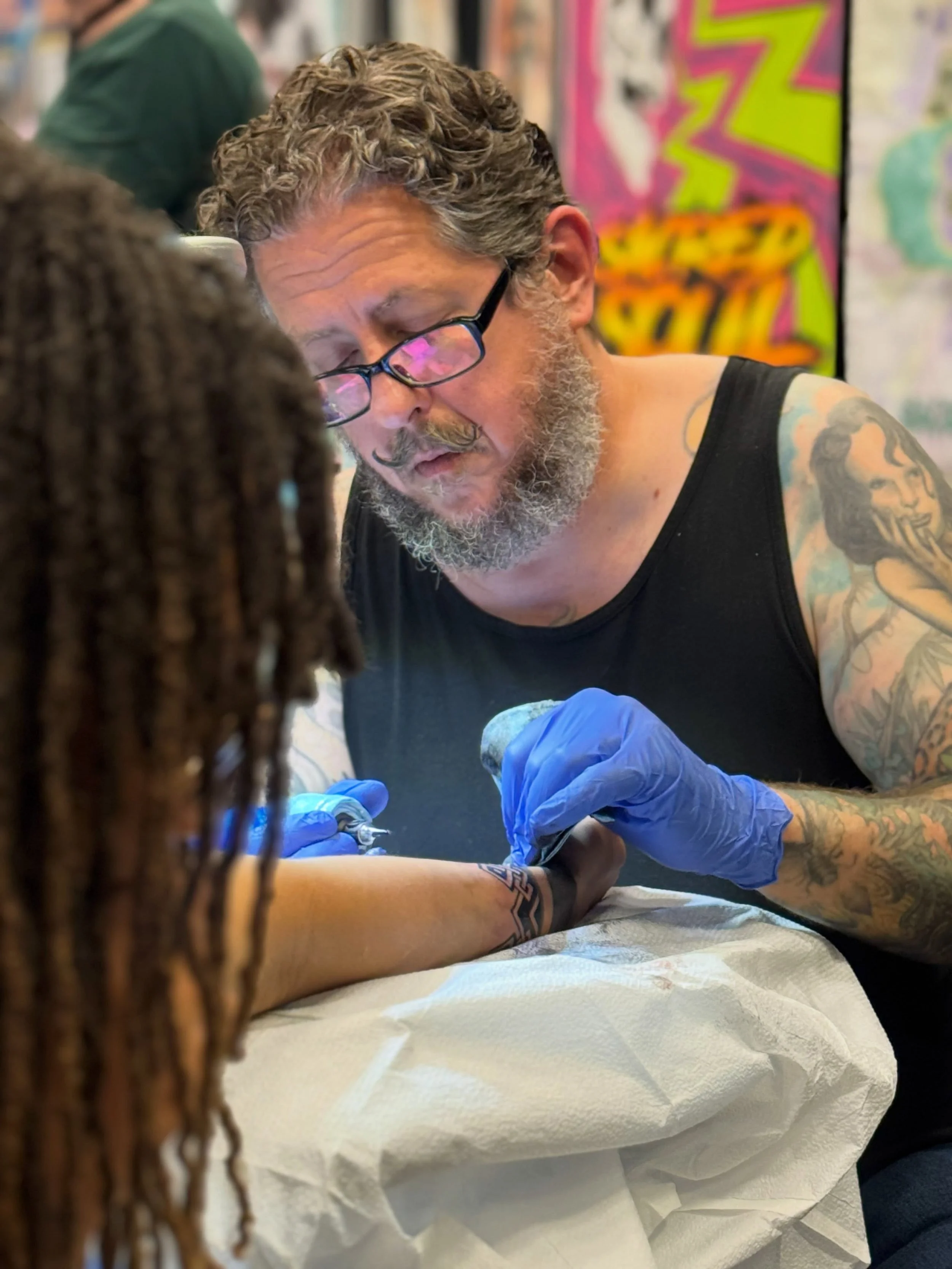
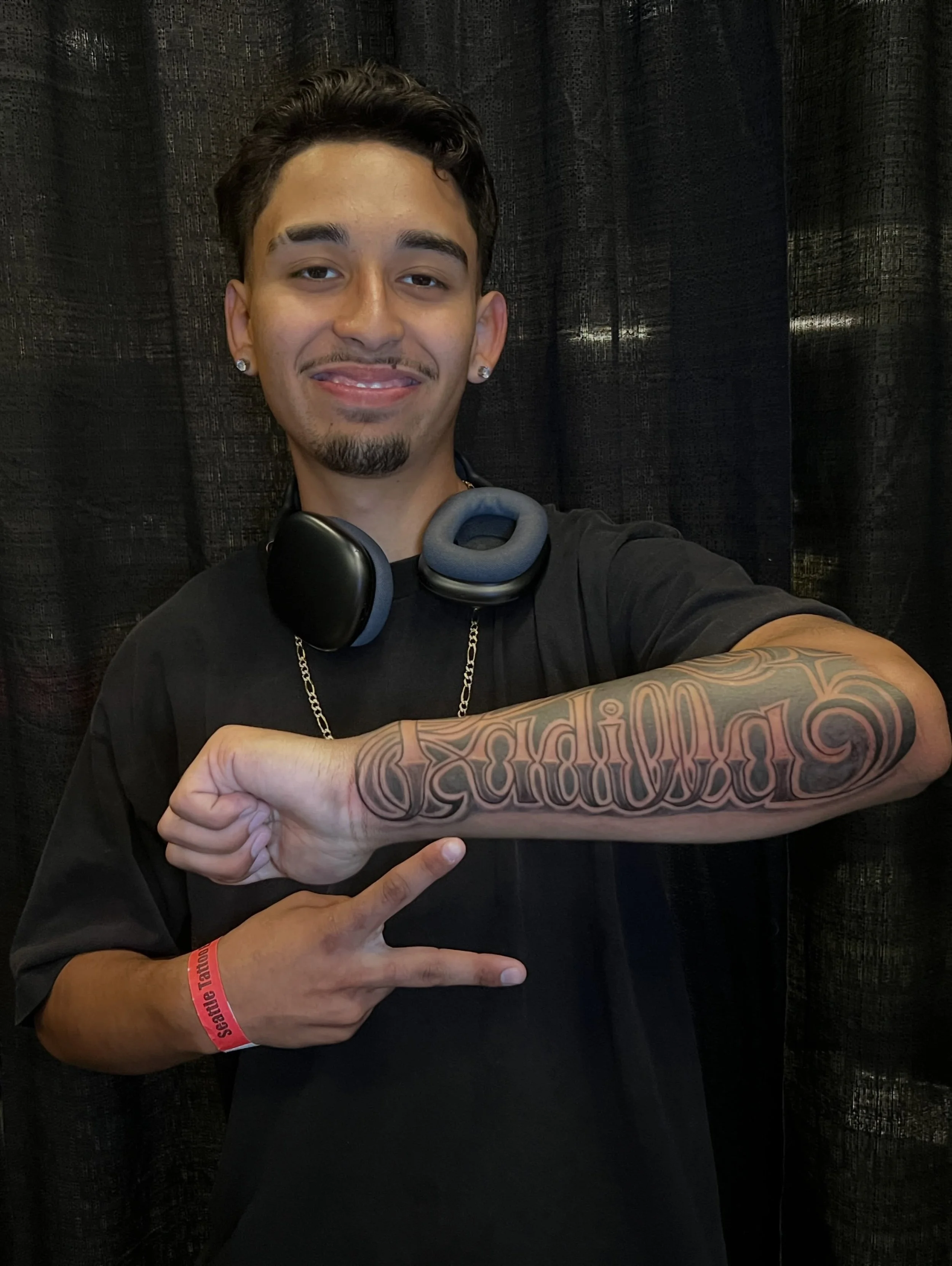
I had a great time @seattletattooexpo this year. Thanks for everyone who said Hello and a special thanks to those who got tattooed!
Does Prep Change for Sensitive Skin?
Not dramatically. About the only adjustment I make is avoiding straight isopropyl alcohol on a client I know has sensitive skin. Otherwise, my general approach to skin prep is already about as gentle as it gets, so there's rarely a need to change much beyond that one substitution.
What Happens If Someone Doesn't Follow Aftercare Advice?
Honestly, most people do just fine, even if aftercare isn't followed perfectly. Worst case, a tattoo might need a touch-up afterward — but that happens for all kinds of reasons unrelated to skin sensitivity, and when it does, I just take care of the touch-up. There's no blame attached to that; it's a normal part of the process for plenty of clients, sensitive skin or not.
What to Avoid After Getting Tattooed
This applies to every client, but it matters even more for sensitive skin: avoid harsh soaps and astringents on freshly tattooed skin, and be cautious with fragranced products. Some people with less reactive skin can get away with using these without any issue, but I don't recommend anyone test that theory on a fresh tattoo — sensitive skin or not, gentle and unscented products are simply the safer choice during healing.
Do Certain Styles or Placements Work Better?
Honestly, not really. I don't have a strong preference to recommend when it comes to style, ink type, or placement specifically for sensitive skin. The bigger factors are the ones already covered above — avoiding active outbreak areas, going slower when needed, and using gentle aftercare products.
Is It Actually Possible? My Honest Assessment
Here's my honest answer: in all my years tattooing, sensitive skin on its own hasn't really come up as a dealbreaker. It seems to be more of an internet-driven worry than something that plays out as a real obstacle in the studio. What I actually see more often — and what deserves more attention — is concern about allergic reactions to the ink itself, which is a genuinely different conversation with different questions to ask before booking.
If you have a diagnosed skin condition like eczema, psoriasis, or rosacea, the responsible move is still what I mentioned earlier: check in with your physician, especially if you're actively managing flare-ups, and let your tattoo artist know upfront so precautions can be built into your appointment from the start.
Ready to Talk It Through?
If you have sensitive skin, a skin condition, or just want an honest conversation about what to expect before committing to anything, I offer free consultations at Tattoo Garden in Everett. We can talk through your specific situation before you book.
Book a Free Consult or browse the gallery to see the kind of work I do.
This post reflects my own experience and approach as a tattoo artist, not medical advice. If you have a diagnosed skin condition, please consult your physician before getting tattooed.